
🍪 12 Dollar Self-care Routine
SNAP-ping you out of your coke habit, AI is watching your trash and negotiate your way out of lobster.


Good morning! We wrapped a year when everyone decided to carry a reusable water bottle everywhere and suddenly hydration became a moral personality. Not having one meant getting judged the same way as eating Cheetos at a yoga class.
Now, with 2026, a lot of us are back at it with that resolution: drink more water. Some people are even adding “water tracking” apps to their phone like it’s a game, as though chugging 64 ounces a day will suddenly unlock the True Meaning of Life.
Cheers to the brave ones who, by the end of January, will be back to pretending our coffee counts as hydration. Happy New Year!
In the food world
🏩Hotels saved $100 million by letting AI watch them throw out food
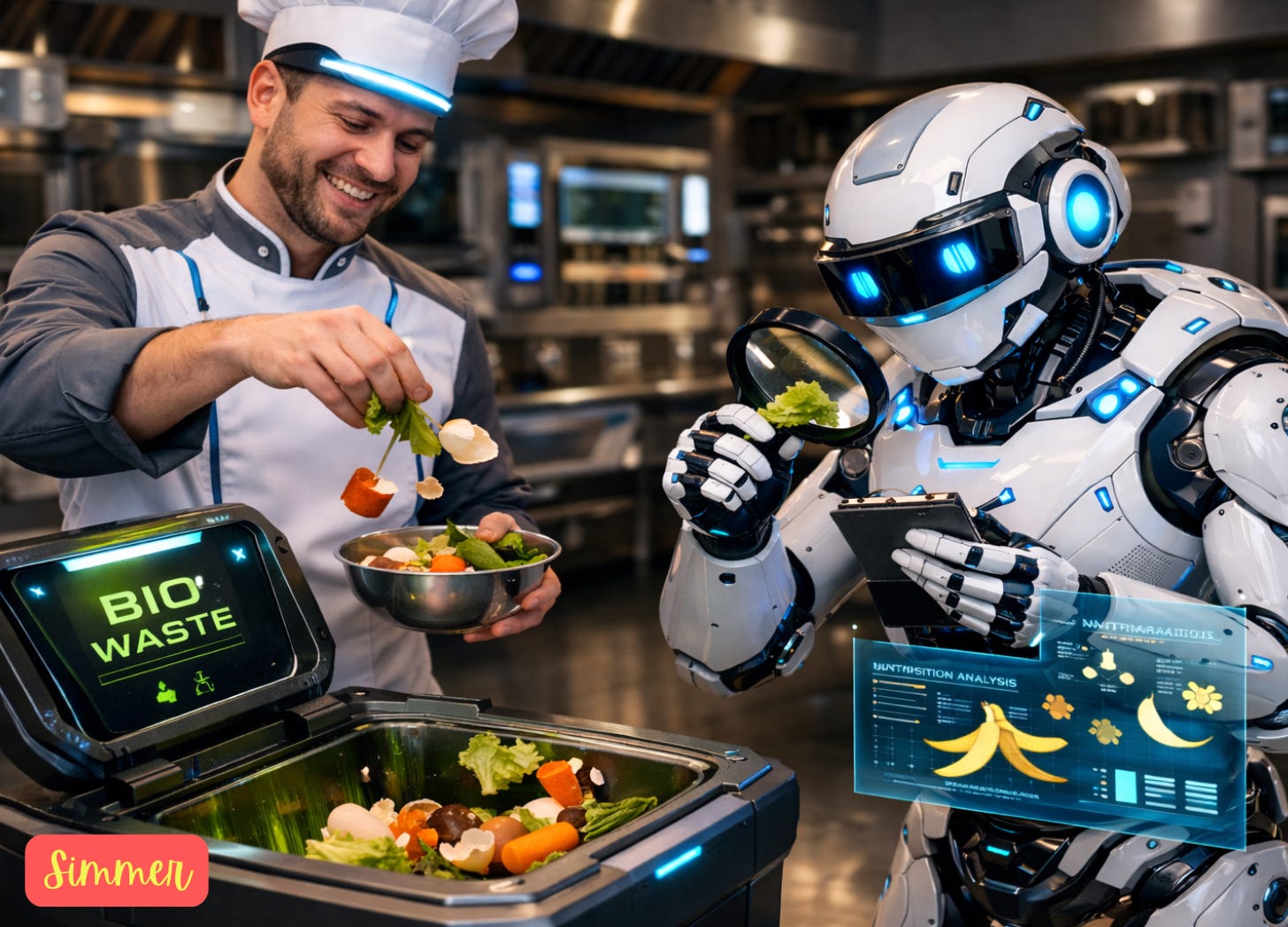
In one of the rare moments where AI isn’t in the news for ruining art, stealing jobs, or hallucinate wildly, it did something useful: watched hotel kitchens throw away food and quietly judged them for it.
Major hotel chains—Hilton, Marriott, Accor, Mandarin Oriental—saved over $100 million last year using Winnow, an AI system that acts as a Ring camera for uneaten food and tracks what gets tossed, when, and why.
The results are dramatic. Hilton cut plate waste by 26% across 45 hotels. Guckenheimer slashed waste by 64%, saving nearly one million meals a year. Considering kitchens typically waste 5–15% of what they buy, that’s a significant saving.
The newest version, “Throw & Go,” is touch-free: chefs toss scraps into a smart bin and the AI logs it automatically no guilt, no spreadsheets. It’s proof that shame doesn’t work, but data absolutely does.
🙅SNAP benefits can’t buy soda or candy in five states as of yesterday
Indiana, Iowa, Nebraska, Utah, and West Virginia kicked off 2026 by telling SNAP recipients it’s time to “make better choices.” Translation: no soda, no candy, and in Iowa’s case, no most prepared foods that carry sales tax.
The new rules affect about 1.4 million people and are part of a broader push by Health Secretary RFK Jr. and Agriculture Secretary Brooke Rollins to cleanse the $100 billion SNAP program of foods deemed “unhealthy.” Thirteen more states are scheduled to join the crusade throughout 2026, with Missouri slamming the door shut last on October 1.
Supporters say taxpayers shouldn’t bankroll Skittles and Coke. Critics say policing grocery carts is a strange way to fight food insecurity and mostly just punishes people for being poor.
🎢The egg price rollercoaster crashed hard, and the DOJ has questions
Cal-Maine Foods, the largest egg producer in the U.S., saw its stock plummet to a 52-week low of $79 in December, down from over $125 earlier in 2025. The reason? Egg prices collapsed 86%, from $8.20 per dozen wholesale in March to $1.15 by year-end.
The spike was driven by Highly Pathogenic Avian Influenza (HPAI) wiping out over 50 million laying hens. But as flocks recovered and supply surged back, consumer demand stayed 15% lower, turns out people really do cut back when eggs cost more than a rotisserie chicken.
Now the Department of Justice is investigating whether producers used HPAI shortages as cover for anticompetitive price-fixing. A class-action lawsuit alleges that egg prices “dropped dramatically only after news broke of a federal antitrust investigation”, suggesting the crisis pricing wasn’t entirely about supply.
Little Treat Culture: $12 cookie self-care
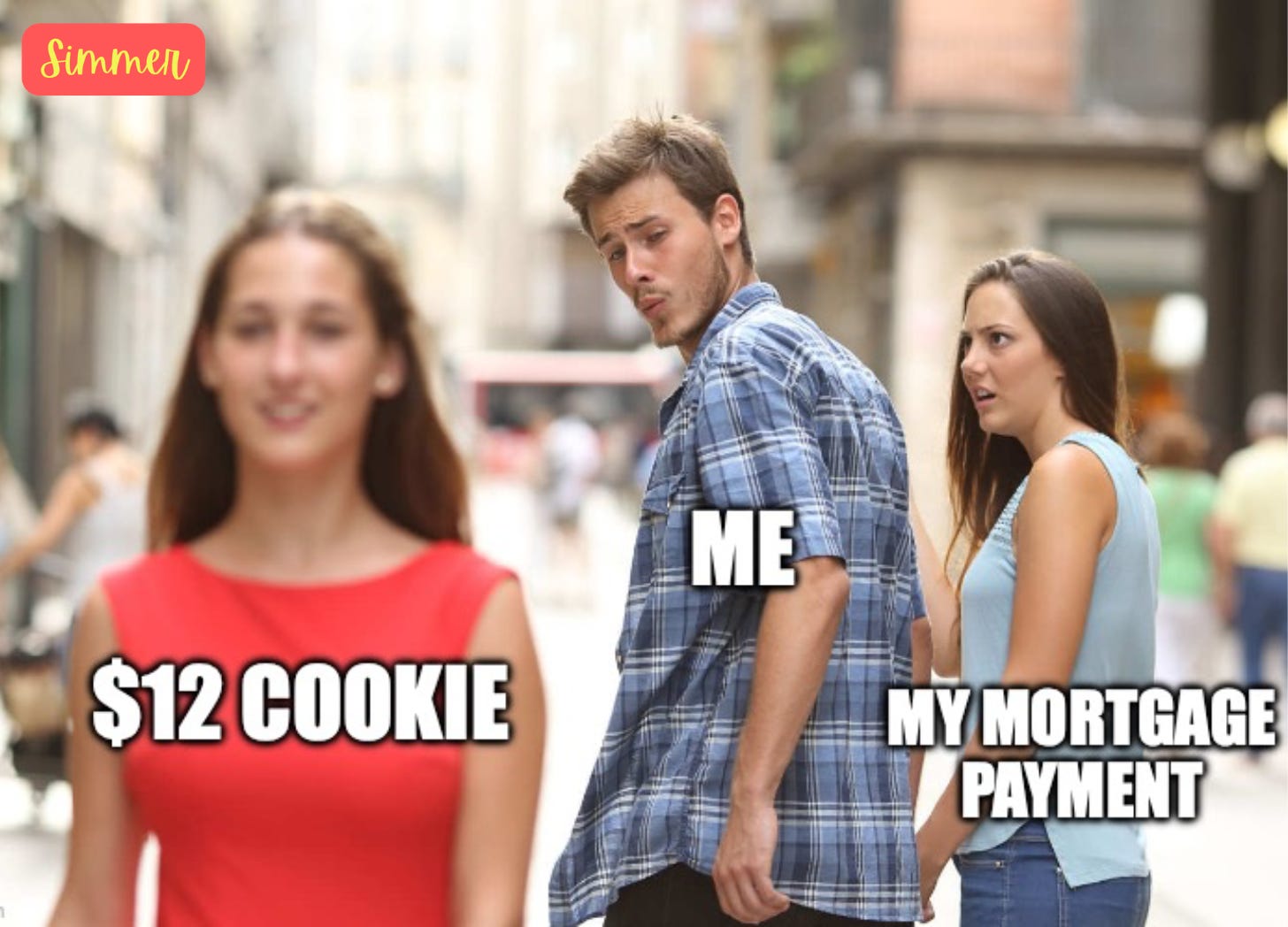
You are not alone if you spent $200 on cookies late year. “Little treat culture” took over 2025 like a sugar rush, and it wasn’t some random glitch. With restaurant meals costing more than a used car, we all pivoted to affordable indulgences.
According to Circana, 44% of Americans indulge in little treats at least a few times a week. Ice cream’s leading the charge at 56%, followed by chocolate bars at 52% and baked goods at 41%. These aren’t impulse buys, they’re strategic joy investments in a world that refuses to make sense.
Here’s the plot twist: little treat culture is really just the economy’s way of making us feel better about not being able to afford a Instagram worthy vacation or that perfect HGTV home. It’s indulgence without the whole-life-crisis price tag.
Food brands caught on faster than a kid on an electric scooter. Crumbl Cookies turned weekly rotating flavors into a cult, Levain Bakery expanded faster than your inbox after you sign up for a mailing list, and even grocery stores started selling $3-5 cookies at checkout, knowing you’re emotionally fragile by 6 p.m. on a Tuesday.
The genius of little treat culture is that it feels good to treat yourself. You’re not wasting money; you’re “investing in happiness.” You earned that cookie. You absolutely deserve that $8 pint of ice cream with fancy honeycomb chunks. And because it’s small, it’s not a real splurge, right? Just a bite-sized one.
But let’s not ignore the unspoken truth: those little treats add up. A $7 coffee three times a week? Boom, that’s $1,092 a year. Two $4 cookies per week? Another $416. Suddenly, your “affordable indulgences” are costing more than a luxury spa retreat in the Swiss Alps.
We’re not saying don’t buy the cookie. We’re just saying the economy trained us to find joy in the small stuff because the big stuff felt like a 10-layer cake we just couldn’t reach. That’s why we’ll spend $7 on a drink but skip the $15 lunch. Ramit Sethi has spent years telling us to buy the Starbucks latte if it makes us happy, and somewhere along the way we took that as financial doctrine. And food companies? They’re loving it.
As we enter into 2026, a realization must be faced while enjoying the next cookie, is self-care really happening or is it being eaten to temporarily silence the existential dread. Either way, it’s well deserved!
Quiz
Cooking tips
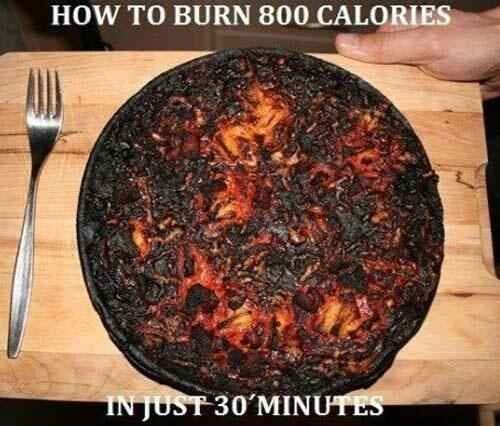
Add a tablespoon of lemon juice to fix burned garlic or onions : Lemon won’t erase your mistakes, but it will distract everyone from them. Simmer a bit longer and the acidity softens that burnt bitterness enough to pass as “intentional depth.”
Microwave garlic for 30 seconds before peeling : A quick zap loosens the skins so they slide right off, no sticky fingers, no garlic wrestling match, no questioning your life choices over a clove the size of a thumbnail.
Keep a slice of white bread in your cookie container : The bread sacrifices itself by absorbing moisture so your cookies stay soft and chewy. Replace the bread when it turns rock-hard and emotionally spent.
Did you know?
25% of all hazelnuts end up in Nutella : Nutella consumes hazelnuts at such an alarming rate that a bad harvest can trigger a global existential crisis for chocolate lovers.
Lobsters were once considered prison food : In colonial Massachusetts, prisoners and indentured servants actually negotiated contracts to avoid eating lobster more than twice a week.
The Caesar salad was invented in Tijuana, Mexico : It was created in 1927 by Caesar Cardini after he ran low on ingredients and started improvising.
While this simmers…
Do not let your friends/family/colleagues/neighbors/stalkers miss out on all the fun. Share the awesomeness here!
Was this mail forwarded or link sent to you? Sign up here!
Reply to this email with your feedback/suggestions. Alternatively, you can find us on Instagram at @chefhusband1607 and @taruntriedit.
Answer: C - Chicken is considered unlucky on New Year’s Day because chickens scratch backward, symbolizing dwelling on the past rather than moving forward.